I’ll be completely honest. I hate the Christmas season.
I know that’s one of those things that you’re not really supposed to say. It’s kind of like saying, “I don’t like dogs/cats/pets of any kind”; or “I think Disneyland is completely overrated; or “I’m actually not that fond of babies or kids”.
Of course, there are plenty of completely normal people who don’t like pets, or who think Disneyland is overrated, or who aren’t very fond of children, for perfectly understandable and rational reasons (and as someone who is generally not keen on pets or Disneyland or children, I’d be happy to give you a list). But once it’s said out loud, it tends to rattle the sensibilities of the masses and illicit genuine concern, as if there must be something very wrong with the person who has spoken these thoughts out loud. So people who hold these opinions generally keep quiet about them.
As a pastor, there’s even more added pressure to be an advocate for the Christmas season. It can feel like an unspoken rule or an unwritten requirement of your job description. “Wait, a pastor who is fed up with the Christmas season? Isn’t that like a chef who hates the food he’s been hired to cook???”
Well, here I am in this disaster of a kitchen, despondently readying the ingredients for the dinner rush. It pays the bills, I guess.
But this Advent and Christmas, I’ve decided to be bold and to venture some candor, probably against my better judgment.
And so I declare again, with unabashed feeling, that I hate the Christmas season.
I hate the consumerism which parades around in the colors of Christmas cheer and mirth, looking for families to chew up and spit out.
I hate the annual new Christmas albums polished to the tee, from pop icons I don’t even listen to in the first place, being blasted on the radio waves and disseminated to the masses unwillingly.
I hate the crushing weight of expectation from society and friends that we ought to contrive happiness and joy out of thin air, even if we aren’t very happy or joyous at all.
Mostly, I hate the feelings of disassociation, weariness, emptiness, and apathy that sidelines me like a roaring Polar Express freight train every single year around this time, as steady as clockwork.
Because I hate that every Christmas season, I come face to face with my loneliness, my regrets, and all the things I wish I could change about some of the people I have hurt and choices I have made, but know that I cannot.
The Christmas season is a wasteland for me. And I am simply trying to survive it.

Strange, Mundane, and Ordinary Reminders
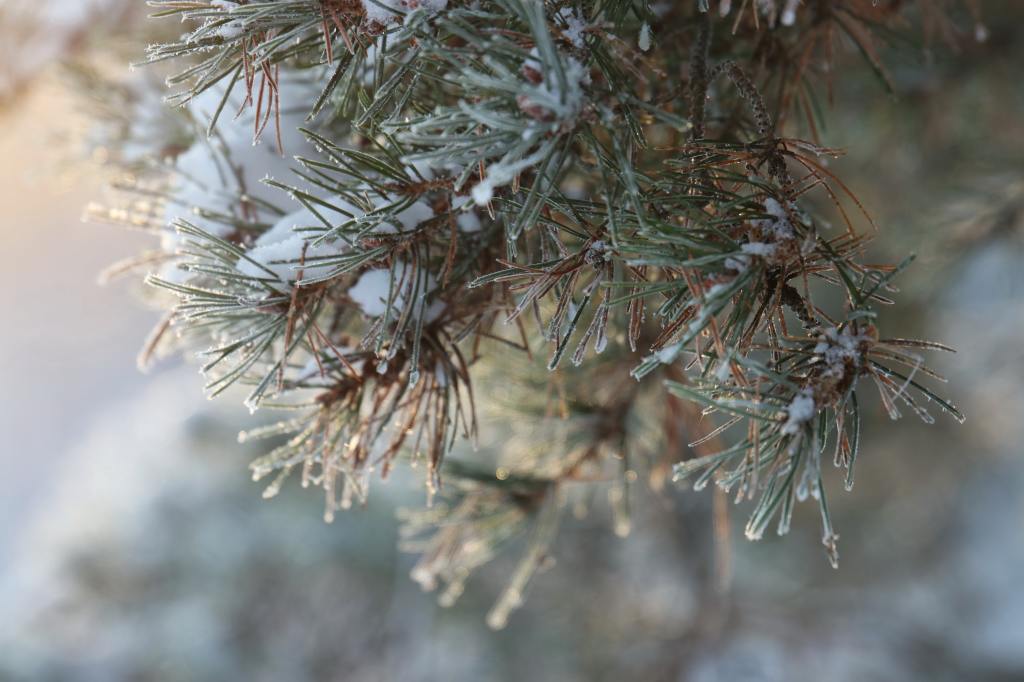
As Autumn has slowly deteriorated to Winter these past couple of months, I’ve been reminded in some strange, mundane, and ordinary ways that, despite this season in Winter being lauded as “the most wonderful time of the year”, Winter is ultimately a season about death.
In my front yard, there’s a gigantic tree that looms and casts its shade over the entire front of the house. It’s one of my favorite things about my home. I’ve daydreamed about building a treehouse in it someday (a project I may still attempt at some point in the future). In the late Summer, I hung a large swing from one of its limbs, and would periodically spend my evenings watching the twilight wane as I lay in it staring up at the sky through the branches.
When Fall hit, the tree began predictably shedding its foliage all over the front of my house. In the beginning, I loved it. Fall is my favorite season, and I thought that the spattering of fallen leaves on my front lawn actually gave my home a bit more character on the outside. But of course, what started off as a few leaves has now turned into heaps of glorious ruin and decay all over my yard – a grotesque mangle of strewn-up dirt, muddy rain, and cat manure from a furry neighbor next door who likes to conveniently use my lawn as his litter box. And as I’ve spent hours raking the trashy leaves into piles, the feeling of futility has set in as I realize that the spaces I’ve just cleaned will soon be covered once again by a fresh layer of foliage the very next day.
It’s like the more I rake away death and decay, the more death and decay seem to rise and take their place.

A week and a half ago, my car decided to stop working. A bad battery. Friends and I took a look at it, and it turns out that the battery, though just a few years old, probably had a couple of faulty cells that made it go belly up earlier than it should have. “The cold can sometimes make the battery work harder and drain faster, you know”, a friend said nonchalantly. I nodded in agreement, not sure if he was actually expressing an informed opinion or just offering a half-baked explanation. But the cold does seem to be draining my electric bike and electric scooter batteries faster as well, so he probably was. And at the very least, I knew the cold is draining my soul faster these days.
A few months ago my HVAC system decided to stop working, too. A bad blower fan – most likely installed incorrectly as they were rushing to fix up the house and make it ready to sell. A faulty blower fan means that while the air conditioning unit and heating unit were in perfect working order, there was no fan to blow it through the vents of the house – meaning I essentially had no air conditioning or heating.
At first, I didn’t mind much, as it was the end of Summer and the beginning of Fall, some of the mildest times weather-wise in California. But as Winter has descended, the cruel, cold bite of frost has crept in, especially this last month or so. And there have been days where the cold of the morning, combined with stress, sleepless nights, and memories conjured by periodic dreams I wish I didn’t have to have, have left me paralyzed in bed for hours after I’ve woken up.
I stare at the details of my ceiling, curiously wondering if this is what it feels like to be depressed. I decide that I’m not quite sure.
As weird as it may sound, I’ve felt my mortality more than I ever have on these cold and lonely mornings. I read once that people who experience constant loneliness die earlier on average than their more well-connected and nurtured counterparts. In light of that, I’ve wondered if all the cold and the loneliness I’ve been feeling recently have been slowly killing me, shedding days and months and years off of my life that I can never get back.
Is this what dying feels like?

Fallen tattered leaves. A dead car battery. A broken blower fan. Not wanting to get out of bed on bitterly cold and starkly lonely mornings. Strange, mundane, and ordinary reminders. But that’s what death is – strange, mundane, and ordinary.
It’s what makes death so terrible.
Because death is inevitable, and Winter is a relentless reminder to us all of that.
A Defiance Against Death
So yeah. The Christmas season sucks.
But before I’m decried as just another modern-day Ebenezer Scrooge, I’d like to make clear that while I might hate the Christmas season, I don’t hate Christmas.
I love Christmas. At least, the substance and the message of Christmas. Because ultimately, I know as a Christ follower that Christmas is about the undoing of death itself, along with all its strange, mundane, and ordinary effects on us all.
Christmas is a defiance against death. It is the dawning of the deepest hopes of every living soul. It signifies the marking of the event when all of eternity was forever split between two epochs: the first, when God stood apart from man; the second, when God became a man. Christmas is as profound and jaw-dropping as it is intimate and poignant. It’s a reminder that God became that which He was not in order to save those who were farthest from Him. And reflecting on the truth of Christmas has been a warm hearth of solace in an otherwise unforgiving Winter.
Because in a way, God is everything that Winter is not. Winter is darkness and frost; God is light and warmth. Winter is frail and fleeting; God is strength and eternality. Winter is isolation and death; God is Trinity and is life. And Christmas is a reminder that, in the person of Jesus Christ, God descended into the heart of all that was the antithesis of who He is, in order to rescue the defeated and the downtrodden. As the prophet once cried in Isaiah 61:1-4,
“The Spirit of the Lord God is upon me,
because the Lord has anointed me
to bring good news to the poor;
he has sent me to bind up the brokenhearted,
to proclaim liberty to the captives,
and the opening of the prison to those who are bound;
to proclaim the year of the Lord’s favor,
and the day of vengeance of our God;
to comfort all who mourn;
to grant to those who mourn in Zion—
to give them a beautiful headdress instead of ashes,
the oil of gladness instead of mourning,
the garment of praise instead of a faint spirit;
that they may be called oaks of righteousness,
the planting of the Lord, that he may be glorified.
They shall build up the ancient ruins;
they shall raise up the former devastations;
they shall repair the ruined cities,
the devastations of many generations.“
The Recipients of Christmas
A common question I return to every Christmas is this: “Who is Christmas actually FOR?”
Conventional worldly wisdom tells us that Christmas is really for children. After all, they tend to reap the greatest benefits every holiday season: a break from grade school, enjoying great food at family gatherings they didn’t have to cook or put together, and receiving all the gifts they’ve been nagging their parents and grandparents about all year.
But while Christmas is probably for those with child-like faith, I don’t actually think that Christmas is for children. Not really.
Because children are generally too innocent. They haven’t discovered yet that disappointment and heartache are part of the fabric of life. They haven’t made choices that lead to dire consequences they then need to learn to live with. They don’t know what it means to have regrets, or to feel the sting of despair. And so as great as Christmas is for kids, Christmas isn’t primarily for them.
Because Christmas is really for those who have been beaten down by life. It’s for those who mourn in lonely exile within the shadowlands; for those who are desperately looking for relief and salvation; for those with burnt-out hearts that have almost forgotten how to rejoice. Frankly, it’s for people who have made enough mistakes in life to know that what they really deserve is the opposite of what Christmas offers and promises.
In other words, Christmas is for people like me.
And even though a big part of me is struggling to believe that this Advent, I’m doing my best to do so.

‘On Them Has Light Shone’
One of the greatest prophetic passages about the coming of the Messiah is found in Isaiah 9:1-2,
“But there will be no gloom for her who was in anguish. In the former time He brought into contempt the land of Zebulun and the land of Naphtali, but in the latter time he has made glorious the way of the sea, the land beyond the Jordan, Galilee of the nations.
The people who walked in darkness
have seen a great light;
those who dwelt in a land of deep darkness,
on them has light shone.“
This same passage is quoted in Matthew 4:12-17 as Jesus begins His ministry in Galilee, fulfilling the prophecy Isaiah gave 700 years prior.
But a question looms as we consider the prophetic words of Isaiah: Why would God choose Galilee as the place where the Messiah would begin the restoration of all things?
After all, the Messiah would be a descendant of the tribe of Judah: a region not even remotely close to the land of Zebulan or the land of Naphtali near Galilee.
On top of all that, Galilee was a region in the Divided Kingdom that was often a focal point for some of the worst of Israel’s sin and idolatry – so much so that when invading armies would come to conquer Israel from the north, Galilee was often the first region to experience God’s wrath and judgment through foreign conquest.
And yet the dawning of redemption would occur not in Jerusalem or Bethlehem or any of the regions of Judah – but in Galilee, “a land of deep darkness”, infamous for its rebellion against and estrangement from God? It doesn’t make any sense.
Until you realize that it does. Because God was trying to make a crucial point in the unfolding of salvation history. It’s the same point of Advent, the same point of Christmas, and the same point of the Good News that Jesus shed His blood to secure for us.
And it is this: Our redemption can only begin at the very heart of our deepest devastation and ruin.
Because it is there that we find that Jesus plunged from the loftiest heights to the furthest depths in order to seek us out and save us. It is there that the gloomy clouds of night are dispersed, that man is released from the bondage of sin and fear, and that a weary world can finally rejoice.
And it is there, only there, that we find that Jesus is indeed ‘Immanuel’, God with us.

Waiting Is All I Have Left
I wish I could end this blog post by saying that despite the somber and grim tone up until this point, I really do have happiness at the end of it all. I’m tempted to do so, if only for the sake that people won’t worry about me.
But since I’ve already ventured a fair amount of honesty, I’ll keep that trend going by saying that that would be completely disingenuous.
The truth is, I am not happy. I’m just not. No amount of Christmas cheer or holiday spirit or festive enthusiasm is going to change that.
But I do have hope.
And while this Advent and Christmas it may feel somewhat diminished and frail – less like a vibrant and radiant fire, and more like a faint and glimmering ember – it is hope nonetheless.
Hope that Winter will eventually thaw, and the days will grow longer. Hope that the God of Jacob has promised to meet me in my grief. And hope that Jesus doesn’t meet us on the way down or on the way up, but at the very bottom – because that is where He went to bring us relief.
In Psalm 27:13-14, David writes,
I believe that I shall look upon the goodness of the Lord
in the land of the living.
Wait for the Lord;
be strong, and let your heart take courage;
wait for the Lord.
So this Advent and Christmas, I will wait.
I will wait, with all the scraps of strength and courage that I have left.
I will wait, in faith that one day I shall look upon the goodness of the Lord again.
I will wait, because waiting is all that I have left.
But He has promised that it is enough. And I know that He will not tarry long.
Maranatha Immanuel,
Andrew

 Prodigal Musings
I appreciate this, Andrew. Your writing is beautiful, but your honesty is what pulls me in. I am walking through a hard Christmas and it is not the first one. There is such a contradiction between “festive” and feeling overwhelmed, frail, and even fearful. Yet, that is the paradox of Christmas. Thank you for sharing this, and I hope that your HVAC system gets fixed!
LikeLiked by 1 person